Trends & Predictions
-

Internship Program Retention Rates Underscore Long-term ROI
Internship programs are about more than just getting quality hires in the door: Retention metrics reported in NACE’s 2026 Internship & Co-op Report demonstrate the long-term ROI of having a program.
-

We’ve Outgrown the Career Fair—So Why Are We Still Doing Them?
Career fairs have a role in a student's career journey, but instead of being a focus, they are best used as part of a broader, more innovative ecosystem that prioritizes skills and relationships.
-

Classroom Collaborations: Recruiters Connect With Student Talent, Faculty
Employers are going into the classroom to share expertise and establish relationships with students and faculty, according to results of NACE’s 2026 Internship & Co-op survey.
-

Sensitive Data and Logic Bombs: Why Perpetrators Are Using Fake Identities in the Job Search
Employers are increasingly reporting attempts by fake candidates to obtain jobs—and gain access to the organization’s systems and properties—for unlawful purposes.
-

Employers Expect to Hire 5.6% More New College Graduates This Year
Employers expect to increase new college graduate hiring from the Class of 2026 by 5.6%, a projection driven upward by the more than one-third of respondents reporting plans to bring in additional hires, according to results of NACE’s Job Outlook 2026 Spring Update.
-

Relocation Assistance for Interns: Why It Matters and How Employers Set Amounts
Approximately one-half of employers responding to NACE’s 2026 Internship & Co-op Survey report that they provide financial relocation assistance to interns, a benefit that they say also boosts their experiential education programs.
-

Intern Conversion Rate Hits Highest Mark in Five Years
Key metrics for internship programs—offer, acceptance, and conversion rates—all increased among 2024-25 interns compared to 2023-24 interns.
-

Employers Expect to Hire Nearly 4% More Interns This Year
Employers expect to bring in 3.9% more interns in 2025-26 compared with 2024-25, according to NACE’s 2026 Internship & Co-op Report.
-

Percentage of Employers Expecting to Offer Signing Bonuses Increases
Nearly 56% of employers expect to offer signing bonuses to their new college hires from the Class of 2026, according to results of NACE’s Job Outlook 2026 survey.
-
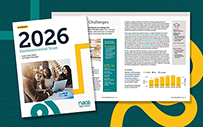
2026 Environmental Scan
NACE’s 2026 Environmental Scan synthesizes proprietary research from Job Outlook and Student Survey, national labor market data, and federal policy analysis to help you anticipate change and plan strategically.
-

Spring Quick Poll On AI
This is a Quick Poll on AI (ChatGPT, DALL-E 2, and Bing AI). NACE is interested to see if and how you are using AI, as well as your thoughts on the growth of AI in the future. This research will help us understand its use among members. The polls run May 2, 2023 through May 19, 2023, and results are offered in real time.
-

Fall 2023 Affirmative Action and Internship Quick Poll
As we enter the new school and recruiting season, NACE is conducting a Fall Quick Poll. The focus of our poll is on two important issues– the impact the end of Affirmative Action is having on our work and state of unpaid internships.
-

The Top Strategies Employers Use to Ensure a Robust Candidate Pool
Employers looking to ensure they have a robust pool of college candidates consider several factors when selecting the schools at which they recruit.
-

Employer Use of Skills-Based Hiring Practices Grows
Among employers participating in NACE’s Job Outlook 2026 survey, 70% report using skill-based hiring, up from 65% last year. Furthermore, among this year’s employers, 71% use this approach at least half of the time.
-

NACE Quick Poll: Employers Cautious About Using AI in Recruiting Efforts
Uncertainty surrounds the use of artificial intelligence among university relations and recruiting professionals and, to a lesser extent, among career services practitioners.
-

Ways Employers Can Strengthen Valuable Relationships With Career Centers
Employers looking to maximize their campus recruiting efforts should establish and grow relationships with career services. There are several key steps they can take to do so.
-

Employers Make More Offers as Student Acceptance Rate Rises, Response Time Shortens
Employers made more offers to candidates this year, but they took longer to make decisions about these offers, according to NACE’s 2025 Recruiting Benchmarks Report.
-

Employers Continue to Recruit in Fall but Adjust Timing of Offers
Employers continue to recruit in the fall but have made significant adjustments to the timing of their offers, according to NACE’s 2025 Recruiting Benchmarks Report.
-

Intern Offer and Conversion Rates Fall, Acceptances Rise
Offers to interns for full-time positions fell along with overall conversion rates even as acceptance rates rose, according to NACE’s latest internship benchmarks.
-

Majority of Employers Will Be Hiring for Full-Time and Internship Positions in Fall 2025
In positive news for the Class of 2026, nearly 87% of employers responding to NACE’s Job Outlook 2025 Spring Update survey said their organization will be actively recruiting for both full-time and internship positions in fall of 2025.
-

NACE Members Weigh in on Mental Health and Well-being
In spring 2025, NACE conducted a follow-up poll to a 2023 survey to better understand the current mental health concerns of NACE members. In the latest poll, more than half of participants self-reported that their mental health was worse at the time of the poll than it was last year at the same time.
-

Internship, Entry-level Job Modality Corresponds With Students’ Job Preferences
Hybrid and in-person remain the preferred work modalities of employers for both their overall and entry-level positions, which matches the ways students prefer to work, NACE research has found.
-

In-person Activities More Effective Than Virtual Ones for Recruiting Interns
In-person activities are the most widely used and effective means for recruiting interns, according to results of NACE’s 2025 Internship & Co-op survey.
-

Impacts of Experiential Learning on the Gen Z Early Career Experience
NACE surveyed early career talent—those who graduated in 2021, 2022, and 2023—to determine if (and how) experiential learning impacted their careers once they had graduated and landed in their first job. The results showed that those who took part in experiential learning while in college had higher rates of career satisfaction and a higher average salary than those who did not engage in experiential learning.
-

More than 70% of Organizations Expect to Increase or Maintain Intern Hiring Despite Overall Dip in Hiring
More than 70% of organizations expect to increase or maintain intern hiring, according to NACE’s 2025 Internship & Co-op Report. However, overall intern hiring is expected to fall 3.1%.
-

The NACE Take: Who Is the Early Career Gen Z Professional?
Understanding the experiences, preferences, and goals of the early career Gen Z professional will help employers craft meaningful experiences that will ultimately enhance productivity and retention, while career centers will be able to better guide their students.
-

Nearly Two-Thirds of Employers Use Skills-based Hiring Practices for New Entry-level Hires
Close to two-thirds of employers responding to the Job Outlook 2025 survey reported that they use skills-based hiring practices for new entry-level hires, and more than half use these practices always or most of the time in their hiring process.
-

Hiring Up 7.3% for the College Class of 2025
Hiring for the college Class of 2025 is expected to increase 7.3% over hiring for the Class of 2024, according to NACE’s Job Outlook 2025 survey.
-

Recruiting Benchmarks: Budgets, Early Offers for Internships, and Retention of College Grads
There are interesting data points from NACE’s 2024 Recruiting Compensation Report in terms of budgets, internship offers, and retention that provide insight into the operations and approaches of URR functions.
-

As Employers Push Out Time From Interview to Offer, Student Response Time Holds Steady
Recruiters are taking more time to extend an offer to a candidate following an interview, but the deadline for acceptance remains close to two weeks.
-

Salaries Climb for All Levels of Recruiting Professionals
Lifted by average increases that ranged between 3.5% and 4.4%, salaries for all recruiting professionals increased in 2023, while the majority of respondents at all levels received bonuses.
-

NACE Quick Poll on Campus Protests and University Recruiting for Fall 2024
NACE is conducting a quick poll and would like your input to assess ways that campus recruiting may be impacted. Last spring, we saw increased campus protests and lockdowns in response to student activism. As we prepare for the fall semester and campus recruiting, there is a potential for increased campus unrest in response to global and national events (i.e. Presidential election, war in Middle East). This Quick Poll is intended to get an overall understanding of the ways university recruiters and campus career centers are preparing for possible campus unrest related to the recruiting process.
-

Intern Conversion Rate Fell, Fueled by Lower Offer Rate
The conversion rate for interns fell, fueled by a lower offer rate. The lower rate could reflect lower-than-expected hiring needs or could signal an issue with the intern selection process.
-

Quick Poll: Do NACE Members Feel Like They Belong at Work?
Belonging at work—feeling that one is valued, accepted, and supported—helps to ensure a healthy, productive, and positive work environment. NACE surveyed its membership to better understand their experiences with belonging in the profession.
-

Employers Slower to Make Offers, but Students Quicker to Accept Them
Employers were slower in making offers to their candidates for their full-time positions than they were prior to the pandemic, although students who accepted the offers were quicker to do so.
-
Hybrid Work Modality for Entry-Level Hires Matches Student Desires
Despite calls to “return to the office” from employers and the prevailing media narrative, the hybrid work modality appears here to stay.
-

The Value of Higher Education
NACE President & CEO Shawn VanDerziel shares NACE research, which indicates that both employers and college students and graduates view higher education and the college degree as valuable.
-

Employers Confirm Their Belief in Value of Higher Ed
Employers confirmed their belief in the value of higher education and higher education institutions in NACE’s latest benchmark survey.
-

Conducting Effective Equity Audits Requires Asking Hard Questions, Planning to Address Findings
Research conducted by NACE and The Center for the Study of HBCUs underscores how important it is for companies to conduct audits to assess gaps and inequities in their recruiting efforts.
-

Predicting Interns’ Intentions to Convert
Internships provide employers an opportunity to identify talent early: Indeed, according to NACE’s 2019 Recruiting Benchmark Survey Report, nearly all respondents (94 percent) said it was very or extremely important to identify talent early through internships.1
-

Calculating and Using an Interviews-Per-Hire Average
Interviews-per-hire average (IPHA) is the average number of interviews conducted with each college hire. IPHA is a deeper analysis to determine the variation of recruiting processes across positions or sourcing channels.
-

Calculating and Using an Applicant-to-Hire Ratio
The applicant-to-hire ratio (AHR) is the average number of applicants for each college hire. AHR can be used to determine the relative interest for various jobs. In general, a higher AHR reflects the general interest in an organization’s opportunities; however, a low AHR may indicate a better efficiency for applicant conversion.
-

Calculating and Using an Intern-to-Full Time Conversion Rate
Tracking, analyzing, and acting on key metrics is critical to the success of a recruiting operation. One of these key measures for assessing the effectiveness of your organization’s internship program is tracking its intern-to-full time conversion rate.
-

Calculating and Using Interview-to-Offer, Offer-to-Acceptance Rates
Tracking, analyzing, and acting on key metrics is critical to the success of a recruiting operation. Some of the most basic metrics are the interview-to-offer and offer-to-acceptance rates. These can help you identify problems—and successes—in your recruiting operations both with full-time hiring and intern/co-op programs.