Join/Renew


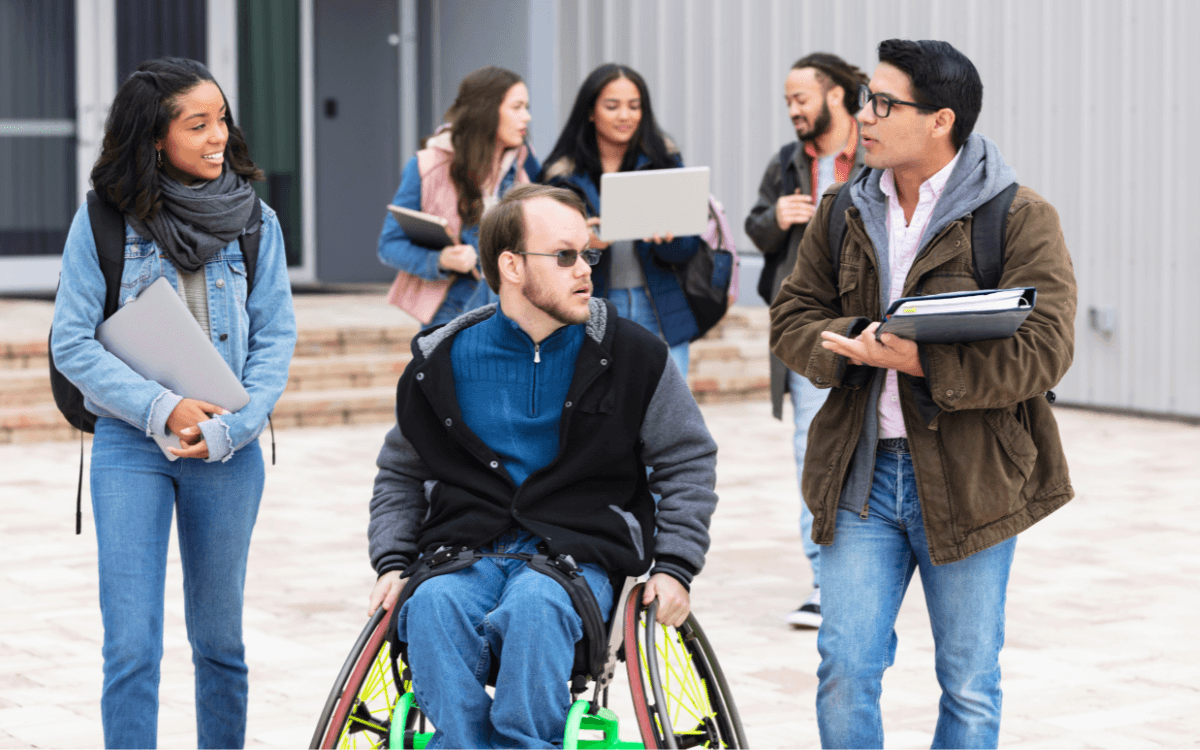
+and+staff+from+Be%7cWell%2c+a+campus+burnout+prevention+program%2c+worked+together+to+connect+wellness+and+career+readiness.+%0a)


+and+staff+from+Be%7cWell%2c+a+campus+burnout+prevention+program%2c+worked+together+to+connect+wellness+and+career+readiness.+%0a)


At the Career Readiness Center (CRC) at the UNT Health (formerly the University of North Texas Health Science Center), we are always looking for ways to make career readiness feel relevant and real to students.
So, when staff from Be|Well, our campus burnout prevention program, reached out about a gap they were noticing in their EQ-i 2.0 initiative, it felt like a natural conversation to have.
EQ-i at UNT Health is designed to combat burnout in the health professions and focuses on well-being, resilience, and emotional intelligence. It is integrated into every program across the UNT Health campus.
Be|Well had already done significant work launching the EQ-i 2.0 assessment across our institution, training faculty champions to facilitate debriefs with students. What they were finding, though, was that students were struggling to connect their results to their professional lives. The debrief conversations were happening—typically in the student’s first semester of their first year—but something was missing: Students understood their scores in a personal wellness context, but they were not making the leap to what those scores meant for how they would show up in a clinical setting, on an interprofessional team, or in a job interview. That is where the CRC came in.
Filling the Gap Between Wellness and Professional Development
Our role in this collaboration was not to rebuild what Be|Well had already created. It was to add a layer that had been identified as missing: the explicit connection between emotional intelligence (EQ) and professional practice. That distinction matters because it shaped how we approached our involvement from the start.
Rather than repositioning the EQ-i as a career tool, we worked to help students see that the same five composite areas the assessment measures, self-perception, self-expression, interpersonal skills, decision-making, and stress management, show up directly in how they navigate professional environments. The vocabulary was already there. What students needed was someone to help them translate it.
This framing also gave us a natural entry point into the NACE career readiness competencies:
- Professionalism and career and self-development are shaped by how students understand their own values, emotional honesty, and assertiveness.
- Communication is affected by empathy and interpersonal awareness.
- Leadership and teamwork draw heavily on relationship skills and the ability to manage conflict.
- Critical thinking under pressure depends on emotional regulation.
Once we started mapping those connections explicitly, students began to see career readiness not as a checklist of skills to acquire, but as something connected to who they already are.
What Our Pilot Session Taught Us
In February 2026, we co-facilitated a pilot debrief session with 44 students—most of whom were in the second semester of their first year at the College of Public Health—across two programs: Master of Public Health and Master of Health Administration.
The session brought together Be|Well staff, CRC staff, and the faculty champion who had already been embedded in those programs through Be|Well's existing initiative. The combination was intentional. We wanted students to experience the connection between wellness and career readiness as something their institution takes seriously, not as two separate programs happening to share a time slot. Although the students had some familiarity with the career readiness competencies, the debrief provided an opportunity to dive deeper into them and connect them to the EQ-i subskills.
The feedback we received was encouraging and also honest about where we need to grow.
- Every single respondent said they felt more prepared to apply EQ skills in professional settings after the session—100%.
- More than four out of five (83%) reported feeling more equipped to adjust how they use their EQ skills and to develop a personal EQ growth plan.
- The component students found most valuable was the stress management and resiliency discussion, selected by 55% percent of respondents. Our students are under a lot of pressure, and helping them name the connection between how they handle stress and how they show up professionally was clearly meaningful.
At the same time, the session showed us what we still need to work on.
Students wanted more small group discussions and fewer lecture-heavy segments. In addition, several asked for more concrete examples of what applying emotional intelligence looks like in a real professional setting. We are building these recommendations into future debriefs.
Interestingly, there was also a moment during the debrief session that illustrated the need for integrating career readiness and burnout prevention. A handful of students exhibited unprofessional behaviors, e.g., holding side conversations and making disruptive remarks. Rather than being discouraging, that became a real-time reminder of why this work matters. EQ and professionalism are not things students arrive already knowing. They are things we have to teach intentionally.
What Makes a Partnership Like This Work
One of the things this collaboration has reinforced for me is that cross-campus partnerships work best when each office stays in its lane while genuinely leaning into what the other brings. Be|Well built something real. The staff did the hard work of getting faculty trained and students assessed. What they needed was not a co-owner of that program. They needed a partner who could extend its impact in a specific direction.
A few structural elements have made this work in practice. Because trained faculty champions were already embedded in academic programs, the EQ-i was not arriving as a foreign concept when the CRC staff showed up. Students had existing relationships with those facilitators, which created a level of trust and familiarity that we built on rather than starting from scratch.
How the assessment gets framed also matters enormously. From the CRC's side, we have been intentional about introducing the EQ-i as a professional development tool in the context of our involvement, not a wellness screening. That framing changes how students engage with the career readiness conversation specifically. When they understand that we are there to help them connect their results to their professional goals, they show up differently.
Lastly, the design of the debrief session has to prioritize interaction, as our pilot data showed. Students learn more from discussing and applying concepts than from hearing them explained. That has directly shaped how we are planning future sessions.
Where We Are Headed
We are continuing to refine our piece of this model. Future sessions will incorporate more active learning, including scenario-based group activities where students work through professional situations using what they know about their EQ composites. We are also looking at opportunities to expand this collaboration across additional programs at UNT Health as interprofessional education grows.
For career services professionals considering something similar, my advice is to pay attention to what is already happening on your campus. Be|Well had already done the heavy lifting. What they needed was a partner who could speak to the professional side of what they were teaching. That kind of collaboration does not require building something new from scratch. It requires being willing to step into someone else's work and add value where it is genuinely needed.
Emotional intelligence is not a wellness concept or a career concept. It is both. And when the right campus partners come together to say that out loud, students start to hear it.