Our Job Outlook 2026 report shows a cautious recruiting landscape, where employer hiring plans for new college graduates appear to be leveling off.
Employers continue to value hands-on experience, internships, and career-readiness skills, even as trends like skills-based hiring and AI reshape the entry-level job market.
Explore the data and insights shaping the next recruiting cycle.
Posted November 2025.

Employers are projecting a 1.6% increase in hiring for the Class of 2026 when compared to the Class of 2025. This is comparable to the tight labor market employers reported at the end of the 2024-25 recruiting year.
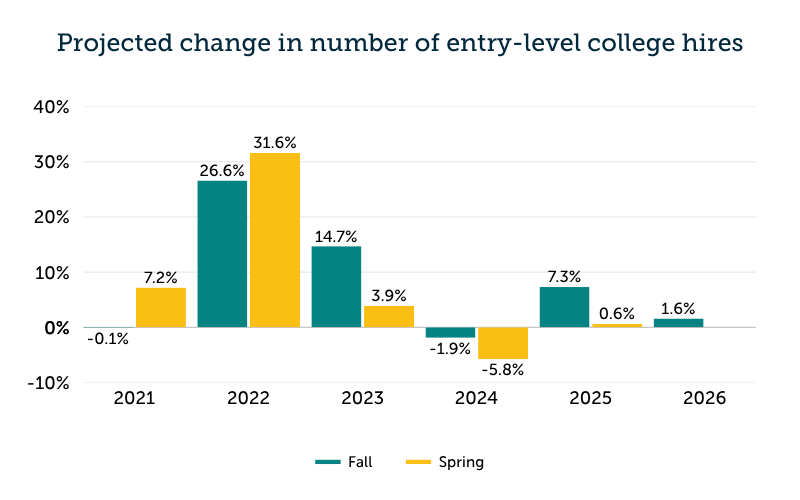
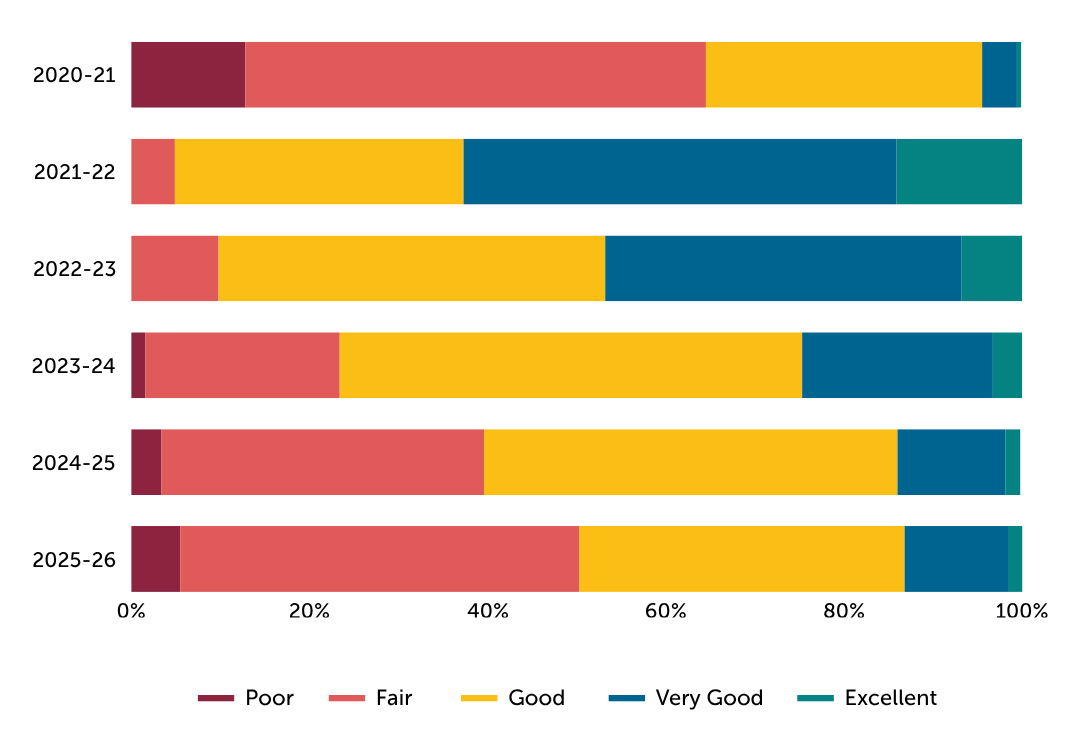
Overall, a plurality of employers—45%—characterized the overall job market for Class of 2026 graduates as “fair.”
The last time the largest group of employers identified the job market as “fair” was in 2021, when 52% rated it as “fair” and the overall hiring projections were also flat.
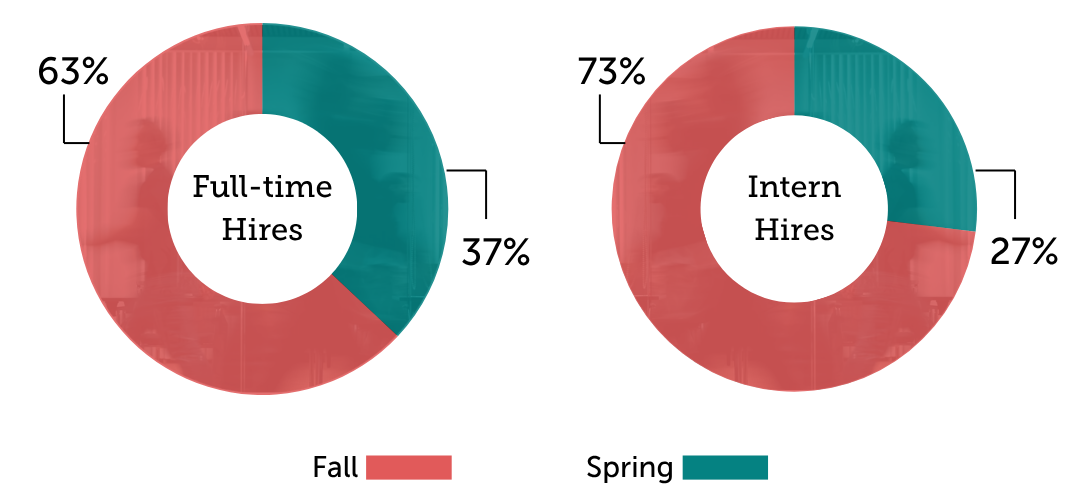
A larger percentage of college recruiting is typically conducted in the fall, but the percentage of recruiting taking place in the spring is increasing and stands at 37% for full-time hires and 27% for interns. This suggests some uncertainty on the part of employers. For comparison, in the years prior to the pandemic, nearly three-quarters of recruiting for full-time hires was done in the fall, with the remaining completed in the spring.

Employers value experiential education in the candidates they recruit. Nearly all respondents cited U.S.-based internships as valuable, while slightly more than three-quarters find value in co-ops.
In addition, more than 40% of respondents seek candidates with on-campus student work and those with apprenticeships.

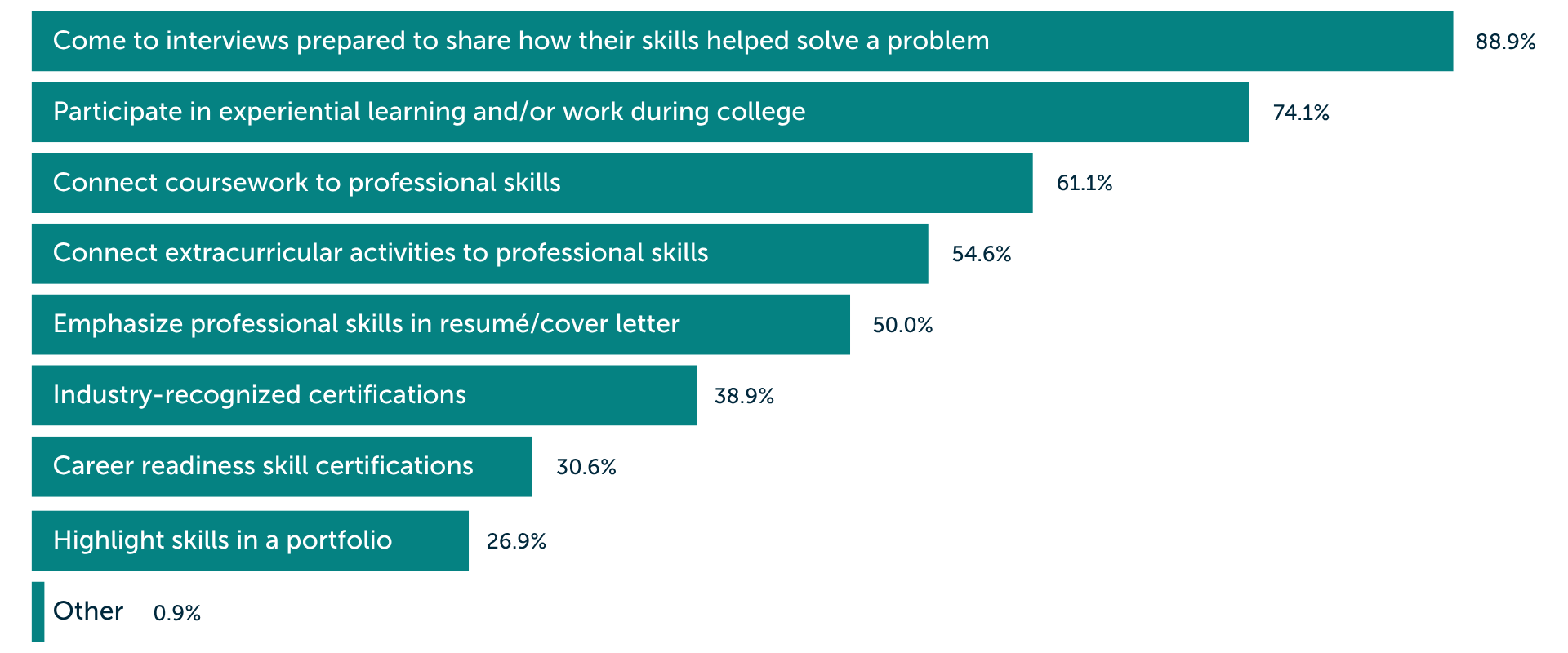
Employers point out that the top way students can demonstrate skills in preparation for interviews is to plan to share examples and situations when they used their skills to solve problems.
Employers also reiterated the importance of experiential learning and/or work during college and being able to tie their college coursework and extracurricular activities to professional skills.
13.3%
10.5%
The Job Outlook 2026 report is the definitive source on employer hiring projections for new college graduates.
Complete the form to access the findings, including trends in hiring intentions, salary expectations, and the growing role of skills-based evaluation.
Fill out the form for exclusive insights.
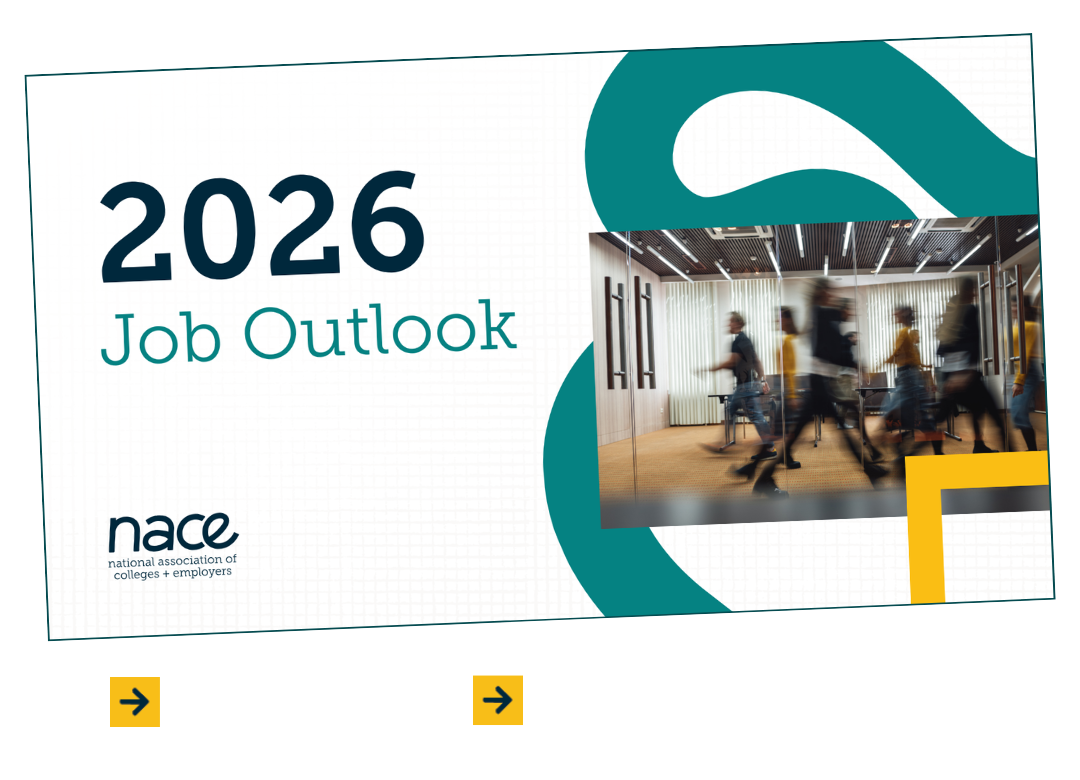
The annual Job Outlook survey is a forecast of employer’s hiring intentions of new college graduates. Data for the Job Outlook 2026 survey were collected from August 7, 2025, through September 22, 2025. Data are calculated based on the number of respondents to each specific question. Totals may not equal 100% due to rounding.
NACE expects to provide a formal job market update during the 2025-26 academic year. Based on data collected in February and March, the Job Outlook 2026 Spring Update report will provide a final update on hiring for 2025-26 graduates. The results will be available in early April.





 Join/Renew

