Join/Renew


-

A Guide to Work Options for Foreign Students
This guide discusses work options available to foreign students attending U.S. universities in F-1 or J-1 status, which are common student visas in the United States. However, there are strict limitations on a student’s ability to work in F or J status.
-

International Organizations Allowing F-1 Employment
This accompanies “A Guide to Work Options for Foreign Students” and is an list of the international organizations that have been designated by executive order and allow F-1 employment.
-

Recent Executive Orders and Policy Changes Affecting Higher Education and Employment
Since taking office, the Trump administration has issued dozens of executive orders, many of which affect institutions of higher education and employers. The executive orders related to diversity, equity, and inclusion (DEI); immigration; and related policy changes are the most consequential in this regard.
-

Navigating Uncertainty: Career Services Leaders Share Effects of Recent Executive Orders
More than 200 senior career services leaders took part in a March 5 virtual meet up hosted by NACE to discuss effects of the Trump administration’s recent executive orders and “Dear Colleague” letter on the profession.
-
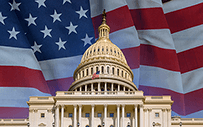
Latest Federal Update
Review the latest executive orders, shifts in regulations, and other actions that impact the work of career services and early talent recruiting professionals.
-

An Employer’s Guide to Navigating the Hiring Process
Employers may use multiple avenues to screen potential candidates. These include 1) creating the job description, 2) creating the written application, 3) conducting the interview, 4) determining which background screening methods to use, and most recently, 5) navigating the use of artificial intelligence (AI). Each contains potential legal liability for the employer if not conducted correctly.
-

Artificial Intelligence in the Preemployment Process
Using AI in the preemployment process can increase objectivity but can also increase the risk of discriminating against candidates.
-

August 2024 Federal Updates: Insights and Priorities
The latest federal updates will keep NACE members informed on how career services and recruiting are impacted by federal action, what developments can be expected, and opportunities available for them to weigh in.
-

U.S. Supreme Court Strikes Down Affirmative Action in College Admissions: How the Decision Impacts Institutions of Higher Education
On June 29, 2023, in Students for Fair Admissions, Inc. v. President and Fellows of Harvard College and Students for Fair Admissions, Inc. v. University of North Carolina, the U.S. Supreme Court struck down the affirmative action policies at Harvard College and the University of North Carolina. The court’s decision striking down race-based college and university admissions policies and programs will have sweeping and immediate consequences for higher education throughout the country.
-

SALARY TRANSPARENCY LAWS AND CAREER CENTERS
Signed into law in 1963, the Equal Pay Act prohibits pay discrimination based on sex. However, 60 years since the passage of the law, women continue to experience a pay gap, relative to men.
-

Preemployment Drug Testing and the Legalization of Medical and Recreational Marijuana
Historically, employers conducted preemployment drug testing to promote a drug-free work environment and safe working conditions for all employees. Applicants who tested positive for prohibited substances, including marijuana, were generally excluded from further consideration for employment. However, as more states legalize the use of medicinal or recreational marijuana, employers are facing difficult decisions regarding their preemployment drug testing policies.
-

Maintaining and Handling Protected Data
This article discusses maintaining and handling protected data, including how to an internal or third-party breach.
-

Marijuana in the Recruiting and Hiring Process
Given the complexity and variety of laws, it is not surprising that employers, applicants, and career services professionals alike are confused about what is and isn’t legal in the case of marijuana—medical and recreational. This article addresses marijuana use as it pertains to some of the most pressing questions surrounding recruiting and hiring.
-

Avoiding the Potential Pitfalls of the Hiring Process
Attorneys George Hlavac and Edward Easterly discuss potential pitfalls in the application and interview for applicants and employers.
-

Harassment in the Workplace: What Employers, Employees, and Interns Need to Know
What constitutes harassment? How are employers required to respond? What should employees do if they believe they are being harassed? Are unpaid interns protected?
-

Restrictive Covenants: Noncompete, Nonsolicitation, Nondisclosure Agreements
Employers may require new hires and interns to sign restrictive covenants, such as noncompete, nonsolicitation, and/or nondisclosure agreements. Attorneys George Hlavac and Ed Easterly discuss the issues.
-

Fraudulent Employers: Tips for Career Centers and Students
Career centers and students must be vigilant about fraudulent employers and should identify steps to take to verify the legitimacy of an employer.
-

International Student Employment: Answering Questions About the Need for “Employment Visa Sponsorship”
Immigration attorney Mark B. Rhoads answers several critical questions about international students navigating the visa sponsorship process.
-

Legal Issues: Marijuana in the Workplace
The legalization of recreational and/or medical marijuana in many states raises a series of issues for employers and employees alike. How are drug testing policies affected? Must employers accommodate use of marijuana for medical purposes? What does legalization mean for federal contractors?
-

Legal Issues: References
The key for reference providers is to know what information should and can be disclosed, and what legal ramifications arise as a result of improper disclosures.
-

FERPA Primer: The Basics and Beyond
Career services professionals should know the key points of the Family Educational Rights and Privacy Act (FERPA) and how they can ensure their institutions are in compliance with FERPA’s requirements.
-

Legal Q&A: Can a student or new graduate volunteer to work unpaid for an employer to gain experience?
Although some recommend a student or new graduate volunteer to work unpaid to gain experience, it is illegal for-profit organizations to have “volunteers” perform work.
-

Legal Issues: Internships
There are a number of laws and regulations governing internships, including whether an intern is classified as an employee. Others cover compensation-related issues—including whether an intern can be paid if they receive credit—workplace safety, employment agreements, and more.
-

Can a Career Center Prescreen Candidates for an Employer? Can Faculty Prescreen for an Employer?
Many career services professionals are asked to prescreen candidates for employers—to identify their “best” students. So, too, are faculty members. Beyond a host of ethical issues involved in such a request, there are legal implications.
-

Legal Q & A: Are employers required to interview international students?
Employers are not required to interview an international student who has an F-1 or J-1 visa, even if the student is otherwise qualified for the job. Although employers can refuse to interview or hire international students who do not already have some form of permanent work authorization, most cannot stipulate that U.S. citizenship is a job requirement.
-

Relationships Between Workers and Hiring Organizations
In today’s marketplace, college students may be offered a wide variety of employment opportunities. The following information should help career services professionals advise their students on the nature of these opportunities.