Join/Renew


-

Nearly Half of 2026 Grads Had a Job Offer Before Graduation Day
More than two out of five new college graduates had at least one job offer before graduation, according to results of NACE’s 2026 Student Survey.
-

The Impact of AI on the Early-career Labor Market
Artificial intelligence (AI) is reshaping the workplace, but one of its most important implications remains unclear: What does AI mean for early-career jobs?
-

Classroom Collaborations: Recruiters Connect With Student Talent, Faculty
Employers are going into the classroom to share expertise and establish relationships with students and faculty, according to results of NACE’s 2026 Internship & Co-op survey.
-

Sensitive Data and Logic Bombs: Why Perpetrators Are Using Fake Identities in the Job Search
Employers are increasingly reporting attempts by fake candidates to obtain jobs—and gain access to the organization’s systems and properties—for unlawful purposes.
-

Op-ed: If Employers No Longer Train Entry-level Hires, What Is Higher Education’s Role?
For generations, the transition from college to career followed a relatively stable script, and entry-level jobs were not just jobs; they were training grounds. Now we’re seeing a shift away from that traditional path. So, whose responsibility is it to prepare students for work?
-

Employers Expect to Hire 5.6% More New College Graduates This Year
Employers expect to increase new college graduate hiring from the Class of 2026 by 5.6%, a projection driven upward by the more than one-third of respondents reporting plans to bring in additional hires, according to results of NACE’s Job Outlook 2026 Spring Update.
-

The Key Skills Employers Seek on College Students’ Resumes
When reviewing the resumes of Class of 2026 candidates for entry-level positions, employers are seeking graduates who provide evidence of polished teamwork, problem-solving, and communication skills, according to results of NACE’s Job Outlook 2026 Spring Update survey.
-

Advising for the AI Economy – Three Shifts Career Services Needs to Make
The irreplaceable value of career staff is found in their judgment, personal relationships, and the human capacity to help a student understand who they are becoming, not just where they are applying.
-

Hourly Wage for Interns Climbs but Is Down Over Last 10 Years in Real Terms
Although the average hourly wage for interns has continued to rise over the past 10 years, due to inflation, it has declined in real terms. Meanwhile, the average hourly wage for co-ops dipped slightly but is up in terms of inflation rates.
-

Percentage of Employers Expecting to Offer Signing Bonuses Increases
Nearly 56% of employers expect to offer signing bonuses to their new college hires from the Class of 2026, according to results of NACE’s Job Outlook 2026 survey.
-
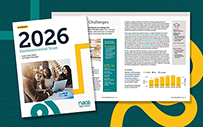
2026 Environmental Scan
NACE’s 2026 Environmental Scan synthesizes proprietary research from Job Outlook and Student Survey, national labor market data, and federal policy analysis to help you anticipate change and plan strategically.
-

What Students Need to Know About the Skills-Based Hiring Process
Students hoping to demonstrate their skills during a skills-based hiring process should share examples and situations when they used their skills to solve problems, according to employers responding to NACE’s Job Outlook 2026 survey.
-

Inside the Skills-Based Workforce Shift
When universities, employers, and students collaborate effectively, college graduates are better equipped to transition confidently into the workforce while strengthening the talent pipeline for the future.
-
Student Concerns About AI Tempering Their Use of It in Job Search
Despite the prevalence of AI in the national dialogue, its use among graduating seniors as a job-search tool is not as widespread as many believe as students have strong concerns about using AI.
-

Fall 2023 Affirmative Action and Internship Quick Poll
As we enter the new school and recruiting season, NACE is conducting a Fall Quick Poll. The focus of our poll is on two important issues– the impact the end of Affirmative Action is having on our work and state of unpaid internships.
-

The Top Strategies Employers Use to Ensure a Robust Candidate Pool
Employers looking to ensure they have a robust pool of college candidates consider several factors when selecting the schools at which they recruit.
-

Intern Evaluations Offer Insight Into Their Internship Preferences
When it comes to offering experiences that interns find beneficial, what are employers doing well and what can they do better? According to respondents to NACE’s 2025 Student Survey, interns valued their colleagues who were friendly and helpful and made the internship a good experience.
-

Employer Use of Skills-Based Hiring Practices Grows
Among employers participating in NACE’s Job Outlook 2026 survey, 70% report using skill-based hiring, up from 65% last year. Furthermore, among this year’s employers, 71% use this approach at least half of the time.
-

How Nontraditional College Students Navigate AI, Career Development, and Belonging
To understand the needs and attitudes of nontraditional students, defined here as students who are age 25 and older, we analyzed results from our 2025 Student Survey. Among our findings: Nontraditional students use AI differently from their traditional-aged peers, don't use the career center as frequently, and have a deep sense of pride in their institution and feel connected and supported by their peers and faculty.
-

NACE Quick Poll: Employers Cautious About Using AI in Recruiting Efforts
Uncertainty surrounds the use of artificial intelligence among university relations and recruiting professionals and, to a lesser extent, among career services practitioners.
-

Ways Employers Can Strengthen Valuable Relationships With Career Centers
Employers looking to maximize their campus recruiting efforts should establish and grow relationships with career services. There are several key steps they can take to do so.
-

Hiring Flat for the College Class of 2026
Reflecting an uncertain job market for college graduates, employers are projecting just a 1.6% increase in hiring for the Class of 2026 when compared to the Class of 2025.
-

NACE Quick Poll: Use of AI by Career Centers to Help Students Is Growing
The use of AI in career centers to help students in their employment journey has grown substantially in recent years, according to results of NACE’s recent Quick Poll on Career Services Benchmarks.
-

Students Report Being Unfamiliar With Skill-Based Hiring
Students appear to be unfamiliar with the concept of skills-based hiring, despite being asked to demonstrate their skills and working to develop them, according to results of NACE’s 2025 Student Survey.
-

Differential in Starting Salaries Between Bachelor’s and Master’s Grads Is Diminishing
Although there remains a salary advantage for college graduates earning master's degrees, the differential in starting salaries between bachelor’s degrees and master’s degrees among top majors is diminishing.
-

Employers Make More Offers as Student Acceptance Rate Rises, Response Time Shortens
Employers made more offers to candidates this year, but they took longer to make decisions about these offers, according to NACE’s 2025 Recruiting Benchmarks Report.
-

NACE Quick Poll: More Than 83% of Respondents Implementing Career Readiness Competencies
NACE’s Career Services Benchmarks Quick Poll reveals the progress colleges and universities are making in implementing career readiness competencies on their campuses.
-

Employers Continue to Recruit in Fall but Adjust Timing of Offers
Employers continue to recruit in the fall but have made significant adjustments to the timing of their offers, according to NACE’s 2025 Recruiting Benchmarks Report.
-

Majority of Employers Will Be Hiring for Full-Time and Internship Positions in Fall 2025
In positive news for the Class of 2026, nearly 87% of employers responding to NACE’s Job Outlook 2025 Spring Update survey said their organization will be actively recruiting for both full-time and internship positions in fall of 2025.
-

NACE Members Weigh in on Mental Health and Well-being
In spring 2025, NACE conducted a follow-up poll to a 2023 survey to better understand the current mental health concerns of NACE members. In the latest poll, more than half of participants self-reported that their mental health was worse at the time of the poll than it was last year at the same time.
-

Half of Employers Have Roles That Offer a Degree Equivalency
There has been much discussion about whether a degree is necessary for every job. The answer is “no.” About half of employers responding to NACE’s Job Outlook 2025 Spring Update survey said their organization has positions that are flexible in terms of degree.
-

Almost Two-thirds of Employers Use Skills-based Hiring to Help Identify Job Candidates
Almost two-thirds of employers responding to NACE’s Job Outlook 2025 Spring Update survey reported using skills-based hiring to help them identify candidates with potential.
-

Early Career Talent and the Effects of Gender
NACE surveyed early career professionals about their experiences and attitudes; in this article, we examine the effects of gender on the experiences of early career talent.
-

Internship, Entry-level Job Modality Corresponds With Students’ Job Preferences
Hybrid and in-person remain the preferred work modalities of employers for both their overall and entry-level positions, which matches the ways students prefer to work, NACE research has found.
-

Hiring Projections Level Off for the College Class of 2025
Although overall hiring projections are up just 0.6% from last year, nearly 90% of employers anticipate increasing or maintaining hiring for the college Class of 2025, according to NACE’s Job Outlook 2025 Spring Update.
-

Impacts of Experiential Learning on the Gen Z Early Career Experience
NACE surveyed early career talent—those who graduated in 2021, 2022, and 2023—to determine if (and how) experiential learning impacted their careers once they had graduated and landed in their first job. The results showed that those who took part in experiential learning while in college had higher rates of career satisfaction and a higher average salary than those who did not engage in experiential learning.
-

More than 70% of Organizations Expect to Increase or Maintain Intern Hiring Despite Overall Dip in Hiring
More than 70% of organizations expect to increase or maintain intern hiring, according to NACE’s 2025 Internship & Co-op Report. However, overall intern hiring is expected to fall 3.1%.
-

Average Hourly Wage for Interns Exceeds $23
The average hourly wage for bachelor’s degree level interns has increased each year over the past 10 years and now stands at $23.04, according to NACE’s 2025 Guide to Compensation for Interns & Co-ops.
-

Career Center Budgets Climb 21% in Last Two Years
Career center budgets for the 2024-25 academic year have increased across the board since 2022-23, according to results of NACE’s 2024-25 Career Services Benchmarks survey.
-

The NACE Take: Who Is the Early Career Gen Z Professional?
Understanding the experiences, preferences, and goals of the early career Gen Z professional will help employers craft meaningful experiences that will ultimately enhance productivity and retention, while career centers will be able to better guide their students.
-

Employers, Students Favor In-person Career Fairs
Attendance numbers reflect the preferences employers and students have for the format of career fairs, results of NACE’s 2024-25 Career Services Benchmarks survey reveal.
-

Navigating Uncertainty: Career Services Leaders Share Effects of Recent Executive Orders
More than 200 senior career services leaders took part in a March 5 virtual meet up hosted by NACE to discuss effects of the Trump administration’s recent executive orders and “Dear Colleague” letter on the profession.
-

Advancing Equal Pay and Pay Transparency
The Lilly Ledbetter Fair Pay Act of 2009 and pay transparency laws enacted by a number of states are helping to advance equal pay for equal or similar work.
-

The Gap in Perceptions of New Grads’ Competency Proficiency and Resources to Shrink It
There is a clear and persistent disconnect between how students and employers perceive students’ development of the competencies they need to be career ready as they enter the workforce.
-

What Are Employers Looking for When Reviewing College Students’ Resumes?
College students from the Class of 2025 looking to enter the job market should highlight on their resumes the attributes and skills they developed in their classwork and through their various experiential assignments. But which attributes and skills are most important to employers?
-

Nearly Two-Thirds of Employers Use Skills-based Hiring Practices for New Entry-level Hires
Close to two-thirds of employers responding to the Job Outlook 2025 survey reported that they use skills-based hiring practices for new entry-level hires, and more than half use these practices always or most of the time in their hiring process.
-

Hiring Up 7.3% for the College Class of 2025
Hiring for the college Class of 2025 is expected to increase 7.3% over hiring for the Class of 2024, according to NACE’s Job Outlook 2025 survey.
-

Class of 2023: Nearly 85% of Bachelor’s Grads Employed or Continuing Education Within Six Months of Graduation
Nearly 85% of Class of 2023 bachelor’s degree graduates and nearly 90% of master’s degree graduates were employed or engaged in further education within six months of graduation.
-

Nontraditional-Aged College Students and Career Preparation
While some of the experiences of nontraditional-aged students mirror those of their traditional-aged peers, there are important areas where they diverge. This information can help career service professionals and recruiters better serve this growing group of college students.
-

Research Reveals Opportunity to Increase Faculty Awareness of Campus Resources
Because faculty are frequently asked by their current and former students for career advice, there is an opportunity to increase awareness among faculty of the resources available to them.
-

Recruiting Benchmarks: Budgets, Early Offers for Internships, and Retention of College Grads
There are interesting data points from NACE’s 2024 Recruiting Compensation Report in terms of budgets, internship offers, and retention that provide insight into the operations and approaches of URR functions.
-

As Employers Push Out Time From Interview to Offer, Student Response Time Holds Steady
Recruiters are taking more time to extend an offer to a candidate following an interview, but the deadline for acceptance remains close to two weeks.
-

Salaries Climb for All Levels of Recruiting Professionals
Lifted by average increases that ranged between 3.5% and 4.4%, salaries for all recruiting professionals increased in 2023, while the majority of respondents at all levels received bonuses.
-

NACE Quick Poll on Campus Protests and University Recruiting for Fall 2024
NACE is conducting a quick poll and would like your input to assess ways that campus recruiting may be impacted. Last spring, we saw increased campus protests and lockdowns in response to student activism. As we prepare for the fall semester and campus recruiting, there is a potential for increased campus unrest in response to global and national events (i.e. Presidential election, war in Middle East). This Quick Poll is intended to get an overall understanding of the ways university recruiters and campus career centers are preparing for possible campus unrest related to the recruiting process.
-

Intern Conversion Rate Fell, Fueled by Lower Offer Rate
The conversion rate for interns fell, fueled by a lower offer rate. The lower rate could reflect lower-than-expected hiring needs or could signal an issue with the intern selection process.
-

Economic Security Tops Class of 2024 Wish List
The college Class of 2024 is looking for economic security in a job, according to results of NACE’s annual student survey.
-

The Degree Continues to Be an Important Factor in College Recruiting
While nearly 20% of employers that responded to NACE’s Job Outlook 2024 Spring Update survey have had discussions about removing the college degree as a key requirement for entry-level positions, nearly 80% of respondents expect that there will be no change in the next two years.
-

Career Progression Among Career Services and University Recruiting Professionals
Results of a NACE quick poll identify barriers and accelerators affecting the career paths of career services and university recruiting professionals.
-

Intern Hiring Is Stable for 2024
Hiring for internships is expected to remain stable this year, according to NACE’s 2024 Internship and Co-op Report. Overall, eight out of 10 employers taking part in NACE’s annual benchmark report expect to maintain (47.2%) or increase (32.2%) the number of interns they bring in for 2023-24 compared to the 2022-23 academic year.
-

Job Outlook Spring Update: Overall Hiring Dips, But Most Employers Will Maintain or Increase Hiring
Nearly 83% of employers responding to NACE’s Job Outlook 2024 Spring Update survey anticipate increasing or maintaining hiring for the Class of 2024. This leaves just 17.4% of respondents planning to decrease hires, but their planned cuts mean overall hiring projections are down 5.8% from last year.
-

Quick Poll: Do NACE Members Feel Like They Belong at Work?
Belonging at work—feeling that one is valued, accepted, and supported—helps to ensure a healthy, productive, and positive work environment. NACE surveyed its membership to better understand their experiences with belonging in the profession.
-

Hourly Wages for Interns Have Kept Pace With Inflation
Hourly wages for interns have kept pace with inflation, signaling the value of these programs to employers.
-

Preferences for Job/Organization Attributes and Benefits Differ by Race and Gender
When it comes to the attributes of a job and an organization and the benefits the organization offers, there are some differences in student preferences by race and gender.
-

Understanding How Black Women Navigate Their Careers Using Funds of Knowledge
A study found that mentorship, community, biculturalism, and resilience are crucial resources and skills that Black women can use to advance their careers.
-

Propelling Pay Equity Forward: Strategies for a Fairer Future
Recent studies reveal that systemic barriers continue to limit progress on achieving pay equity for all, but there are tangible, proven ways that career centers and employers can make an impact.
-
Hybrid Work Modality for Entry-Level Hires Matches Student Desires
Despite calls to “return to the office” from employers and the prevailing media narrative, the hybrid work modality appears here to stay.
-

Recruiters and Students Have Differing Perceptions of New Grads’ Proficiency in Competencies
Although new college graduates looking to enter the workforce and employers hiring these graduates agree on which competencies are most important for job candidates to hone, their perception of student proficiency in them differs.
-

FDS: Outcomes Rate for Class of 2022 Bachelor’s Grads Returned to Pre-Pandemic Levels
After two relatively down years connected with the COVID-19 pandemic, the outcomes rate for Class of 2022 bachelor’s degree graduates returned to pre-pandemic levels.
-

LLMs, ChatGPT, and a Really Bad Idea
In this op ed piece, Chris Miciek discusses problems with jumping into AI without considering the consequences and urges we take the middle ground.
-

The Value of Higher Education
NACE President & CEO Shawn VanDerziel shares NACE research, which indicates that both employers and college students and graduates view higher education and the college degree as valuable.
-

Salaries Expected to Be Stable for Class of 2024 Bachelor’s, Master’s Graduates
Slightly more than 43% of employers plan to increase starting salaries to Class of 2024 bachelor’s degree graduates, and nearly all remaining employers anticipate keeping salaries at last year’s levels.
-

College Educations: If Graduates Had It to Do Over Again, Nearly All Would
New college graduates embrace the value of higher education, with 91% reporting that, if they had a chance to do it again, they would opt to pursue a college education.
-

Small Dip in Overall Hiring Projections for Class of 2024 Follows Record Job Growth
The small dip in college hiring revealed by NACE’s Job Outlook 2024 survey is down from the last two years, when the college job market experienced brisk growth that, in 2022, reached record levels.
-

Employers Confirm Their Belief in Value of Higher Ed
Employers confirmed their belief in the value of higher education and higher education institutions in NACE’s latest benchmark survey.
-

AI on Campus: A Look at Current Practice Among Career Services Professionals
The National Association of Colleges and Employers (NACE) polled its career services members in spring 2023 about their use of AI in their work and in their work with students.
-

Work Modality: The Changing Nature of Where We Work
The research suggests that, long term, we will likely work in and out of the office. Research from the National Association of Colleges and Employers shows that new college graduates want to be in person at least part of the time, but also want the flexibility to work remotely some of the time.
-

What Can Be Done to Shrink the Widening Gender Pay Gap?
Early data from a forthcoming NACE study indicate that the gender pay gap has widened over the past year, with female graduates now earning just 72 cents to every dollar earned by male graduates, down from around 81 cents.
-

Cultural Wealth, Social Capital, And Career Outcomes: Black Alumnae In A Minority-serving Institution
A study at a minority-serving institution uncovers aspects of social and cultural capital that contribute to the college-to-career transition of Black undergraduate women.
-

Average Hourly Wages for 2020-21 Interns, Co-ops Identical at $20.82
The average hourly wage for 2020-21 bachelor’s level interns and co-ops was identical at $20.82, according to results of NACE’s 2022 Internship & Co-op Survey Report.
-

Hybrid Model Is Employers’ Favored Modality for Internships
Regardless of how employers ran their programs in summer 2021, the hybrid model is their favored modality for their 2021-22 internships, according to NACE’s 2022 Internship & Co-op Survey Report.
-

Predicting Interns’ Intentions to Convert
Internships provide employers an opportunity to identify talent early: Indeed, according to NACE’s 2019 Recruiting Benchmark Survey Report, nearly all respondents (94 percent) said it was very or extremely important to identify talent early through internships.1
-

Career Centers Continue to Shift Away From Student Affairs
Over the past 10 years, there has been a clear shift away from housing the career center in student affairs.
-

Why Authenticity Is Essential to an Impressive and Effective Candidate Experience
Students’ expectations around authenticity in recruiting have remained constant, but the pandemic created job-search challenges that affect how they assess employers and their opportunities.
-

Using FDS to Benefit Your School and Demonstrate Value of Higher Ed
Schools that conduct an annual FDS to capture information on how their new college graduates fare following graduation can benefit their own institutions and demonstrate the value of higher education.
-

Recruiters and Students Have Differing Perceptions of New Grad Proficiency in Competencies
New graduates and their potential employers can agree on which skills are most important for job candidates, but differ on how proficient new graduates are in those abilities.